
LinkedIn posting strategy: how to post every day and keep it useful
A practical LinkedIn posting strategy: find ideas in work you already do, write short posts in your own voice and keep a schedule you can hold.
Free app. Runs on your Mac with the Claude or Codex plan you already have.
What a LinkedIn posting strategy is
A LinkedIn posting strategy is a plan for who you are writing for, what you post about, how often you post and how you keep going when ideas run dry. Most people who try to post regularly stop after a few weeks. The reason is rarely a lack of skill. They run out of ideas, write each post from a blank page and have no schedule to hold them to it. A strategy answers those questions once, in writing, so each post is a small task instead of a new decision.
The method below is how an experienced social media manager runs a steady personal or company presence by hand. Each step says what to do and why, then how 10folds carries it out.
What it does for the business
- Stay visible to the people who buyBuyers, partners and future hires check LinkedIn before they call. A steady stream of short, useful posts means they find a working business with something to say, not a profile that went quiet a year ago.
- Get more use from what you already makeEvery article, case and customer question can feed several posts. A posting plan turns work you have already paid for into reasons for people to remember you.
- Build a recognizable point of viewPosting on a small set of subjects week after week makes your name stick to them. Over months, people start to associate you with the questions you keep answering.
- Spend minutes, not eveningsA plan, an idea bank and a schedule remove the daily question of what to write. Posting becomes a short review rather than a creative task you put off.
LinkedIn posting strategy, step by step
Decide who posts, for whom, and how often
The right posting frequency is the one you can still keep in month three.
What to do
- Choose the voice: a founder, an expert on the team or the company page. People tend to respond more to a person than to a logo.
- Write one sentence on the reader: their job, their problem and why they would follow you.
- Pick two to four content pillars, the recurring subjects you want to be known for.
- Set a posting frequency you can hold, from twice a week to every working day, and a fixed time of day.
Why
Consistency matters more than any single post. A daily plan that collapses after two weeks does less than a modest posting schedule kept for a year. Pillars stop the feed from drifting into whatever happened to be on your mind. Writing the reader down also helps later: when an idea does not serve that person, it is easy to drop.
Collect ideas from work you already do
You do not need new ideas; you need to notice the ones your work produces every week.
What to do
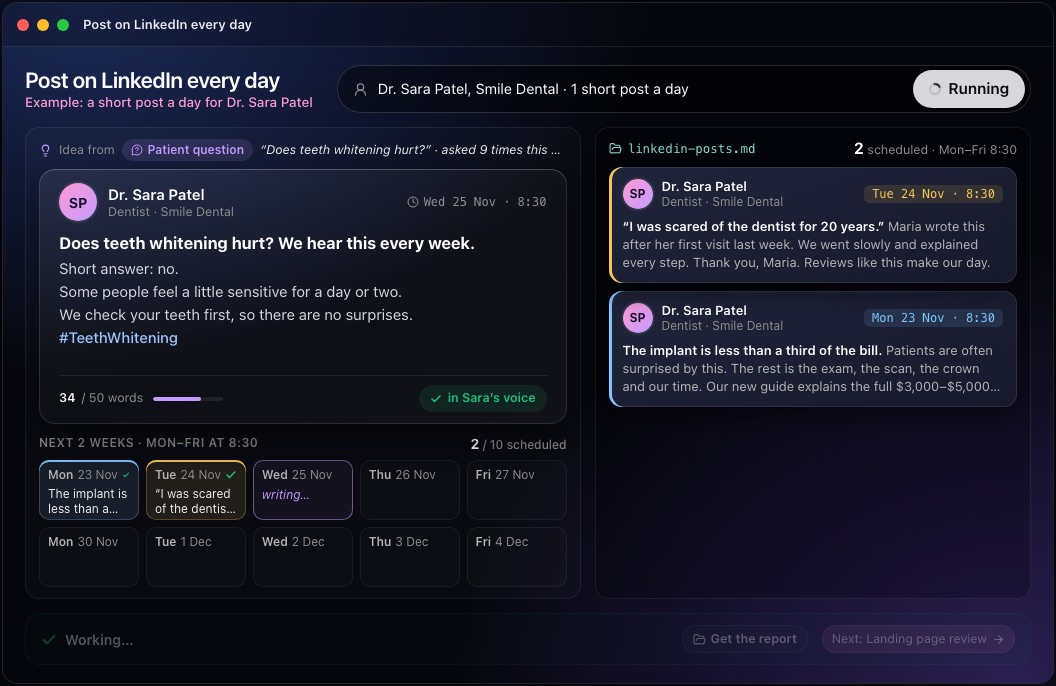
- Keep a running list of ideas, and add to it whenever something happens.
- Mine your own articles and guides: each one holds several separate points.
- Write down the questions customers ask, word for word. A question asked often deserves a post.
- Note small wins, team news, behind-the-scenes moments and lessons from mistakes.
- Tag each idea with its pillar so you can see where the list is thin.
Why
Most blank-page posts end up generic because they start from nothing. Ideas drawn from real articles, questions and events carry specific details, and specific details are what make a post feel written by someone who does the work. A running list also means a slow week never empties the calendar, because there are always ideas waiting.
This step in the 10folds window. Example data from the animation on the home page. Write short posts with a real hook
The first line has one job: make the second line worth reading.
What to do
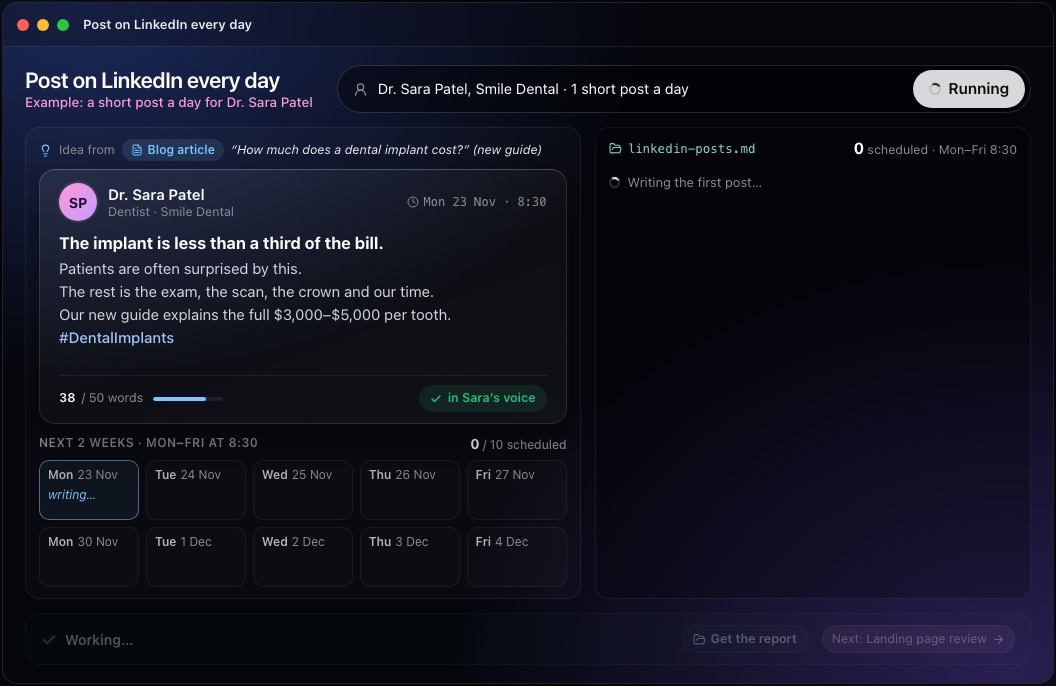
- Keep to one idea per post. If you have two, you have two posts.
- Open with a hook: a clear claim, a number from your own work or a question the reader has asked themselves.
- Use short lines and plain words. Explain any term a customer would not use.
- End with something the reader can do or answer, such as a question, a tip or a link to the full guide.
- Read it aloud. If it does not sound like you, rewrite it.
Why
On a feed, people decide in a second whether to stop. A post that is easy to read, sounds like a person and asks for a reply earns comments, and early comments are what bring a post to more people. Engagement follows usefulness more than polish. A post that sounds like you also builds trust over time, because readers learn what to expect from your name.
This step in the 10folds window. Example data from the animation on the home page. Put the posts on a content calendar
A schedule turns good intentions into a habit.
What to do
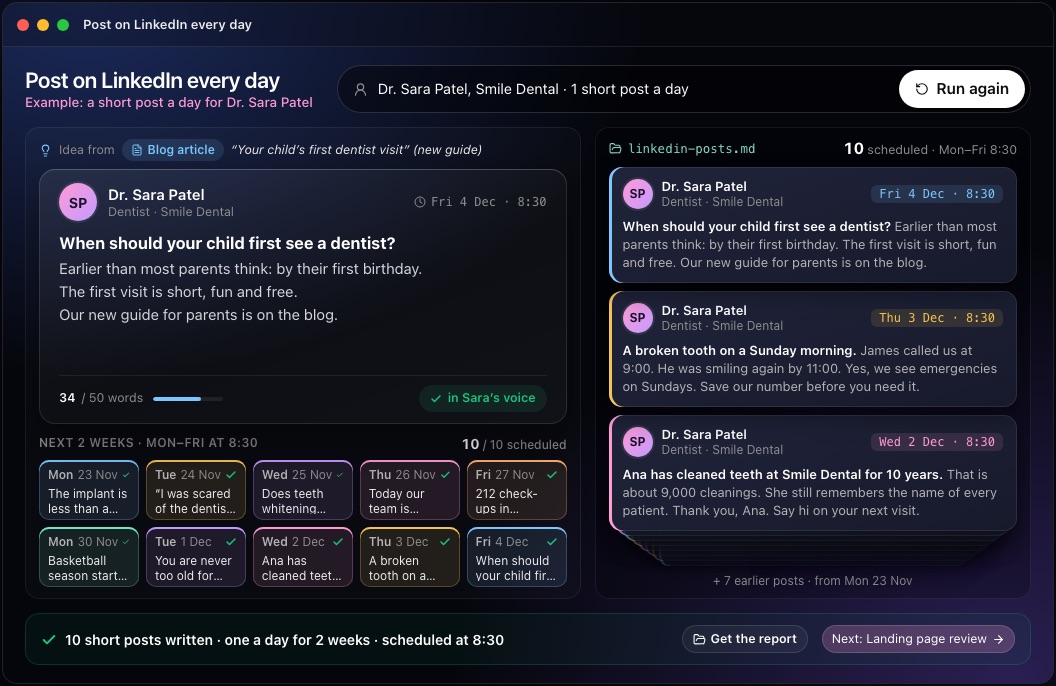
- Write a week or two ahead in one sitting rather than every morning.
- Lay the posts out on a simple content calendar: date, time, pillar, post.
- Alternate pillars and formats so two similar posts never sit side by side.
- Leave a slot or two open for news you cannot plan.
Why
Batching is faster than writing daily and gives you a chance to see the mix before it goes out. A calendar also makes gaps visible early, while there is still time to fill them. Planning the order also lets you place a post on your newest article right after it goes live.
This step in the 10folds window. Example data from the animation on the home page. Review once a month and adjust
Let the comments tell you which subjects deserve more of your time.
What to do
- Once a month, list the posts that drew real comments and messages, not only views.
- Look for patterns by pillar, hook and format.
- Do more of what started conversations with the people you want to reach.
- Drop a pillar that no one responds to after a fair trial.
Why
Each audience is different, and general advice on timing or length only goes so far. Your own results, read over a month, are the most reliable guide to what your readers want. Looking at a month rather than a single day also smooths out the noise of one lucky or unlucky post.
Common mistakes
- Starting at a pace you cannot keepTwo strong weeks followed by silence looks worse than a steady weekly post.
- Posting about everythingWithout pillars, nobody can say what you are known for.
- Writing like a press releaseCorporate phrasing gets scrolled past; plain first-person writing gets read.
- Burying the pointIf the idea arrives in the fifth line, most readers never reach it.
- Judging by views aloneComments and messages from the right people matter more than reach.
What a good result looks like
- A posting frequency and time you have kept for at least a month.
- Two to four pillars, each with a stock of ideas.
- Posts of one idea each, with a hook in the first line.
- Writing that a colleague would recognize as yours.
- A calendar one or two weeks ahead, with room for news.
And then what? Using the result
- Read each post before it goes out and fix anything that does not sound like you.
- Reply to comments on the day; the conversation is the point of the post.
- Turn the questions people ask in comments into new ideas.
- Link the posts that do well to the full article or service page they came from.
- Keep the posts that drew the best replies as models for the next batch.
When to run it
- When you have content nobody seesArticles and guides on your site can each feed several short posts that bring readers back to them.
- When an expert on the team should be visibleA plan and a calendar let a busy professional post regularly without writing every day.
- After a long silence on LinkedInA modest, steady schedule is the quickest way to look active again.
- When a launch or event is comingA planned run of short posts in the weeks before builds attention steadily instead of in one announcement.
Questions people ask
How often should you post on LinkedIn?
As often as you can keep up for months without the quality dropping. For many people that is two or three times a week; others manage every working day. Consistency matters more than the exact number. Start lower than you think and add posts once the habit holds.
Is posting on LinkedIn every day too much?
Not if each post is short and useful. Daily posting becomes a problem when it forces filler. If you run out of real ideas, post less often. Watch the comments: if they thin out while you post more, slow down.
What should I post on LinkedIn?
Things only you can say: lessons from your work, answers to customer questions, short versions of your articles and honest news. Choose two to four subjects and stay with them. A short post on one real question often does better than a long general one.
What is the best time to post on LinkedIn?
When your readers are at work and checking their feed, often early in the working day. Pick one time, keep to it, and compare your own results after a month. Holidays and weekends usually see less activity for business content.
What is a good LinkedIn posting strategy for a small business?
Post from a person rather than only the company page, pick a few subjects tied to what you sell, draw ideas from real customer questions and keep a steady schedule. Reply to comments quickly, since conversation is what makes a profile visible.
What are content pillars on LinkedIn?
Content pillars are the two to four recurring subjects you post about, such as lessons from client work, answers to common questions and news from your field. They keep the feed focused, make it easier to find ideas and help readers remember what you are known for.
More jobs in Marketing
Post on LinkedIn every day, on your own Mac.Free app. Runs on your Mac with the Claude or Codex plan you already have. Your files stay on your computer.
Download for Mac